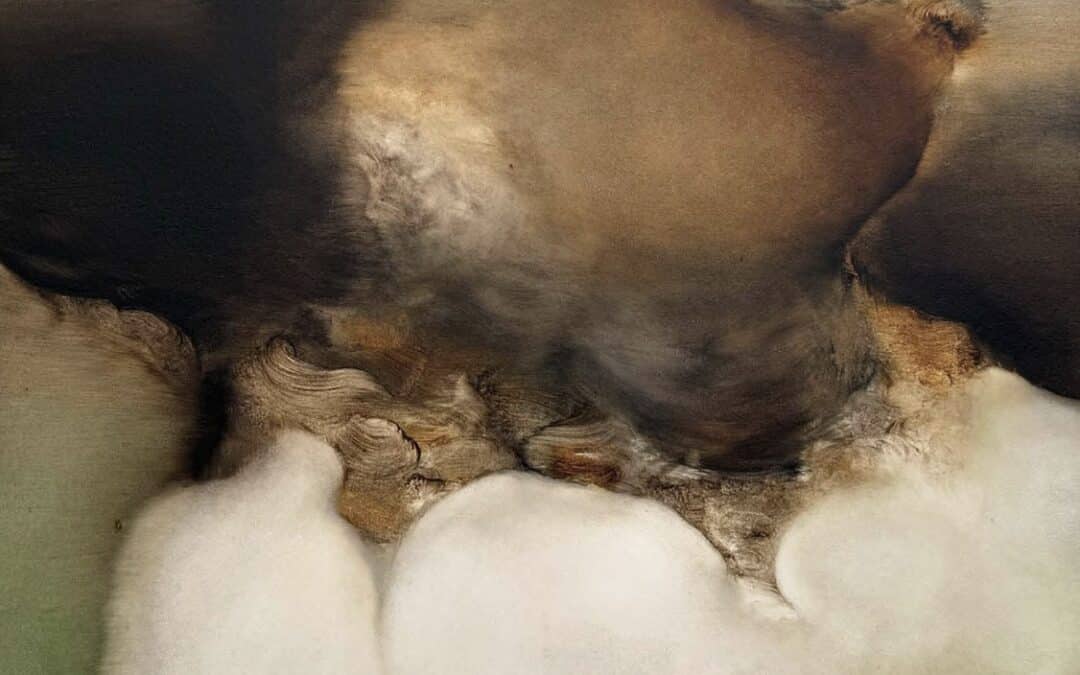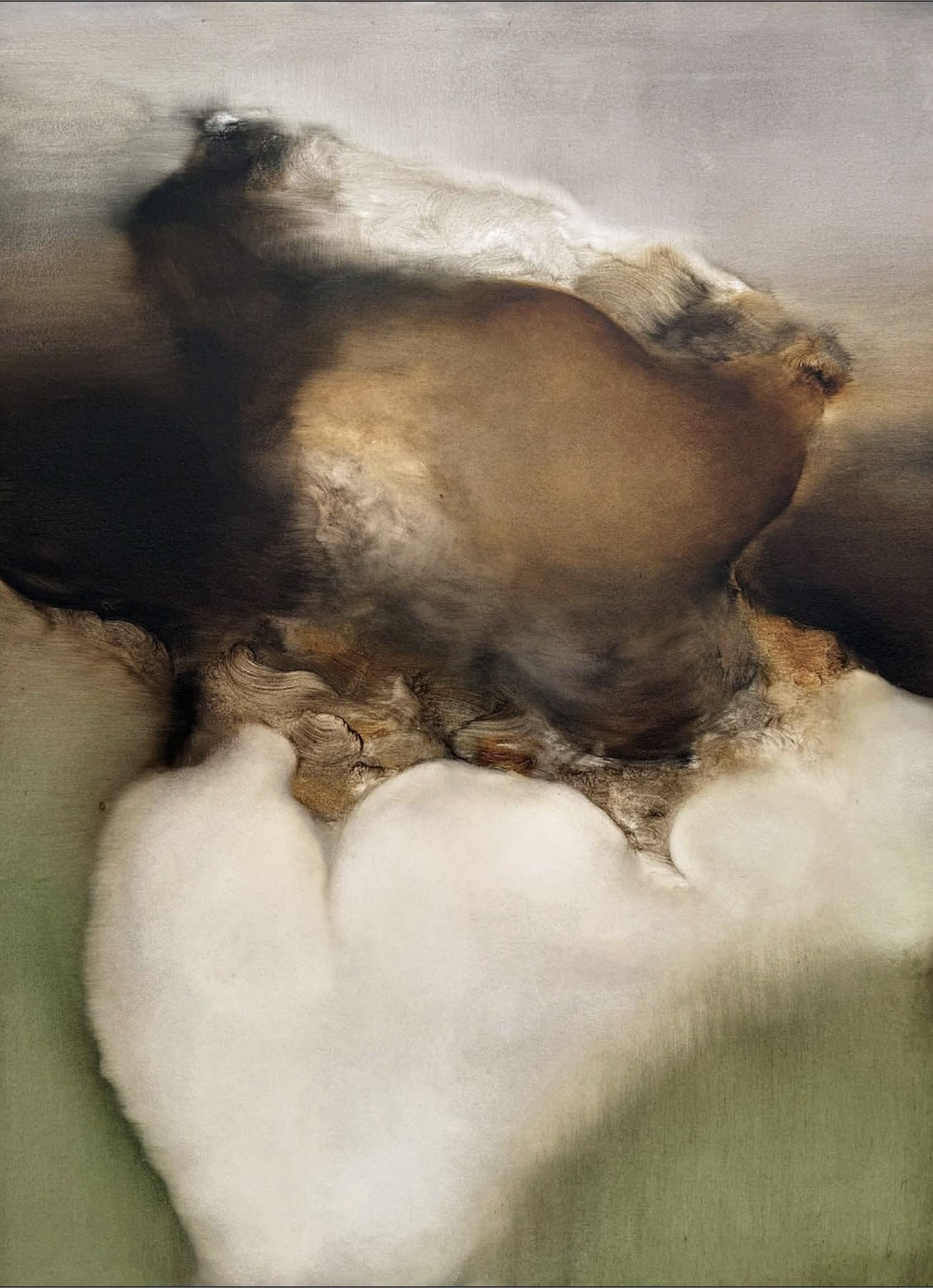
Arthur Rosset’s portrait-format oil paintings form passages to a surreal reality, suggested to viewers through the titles of the works and manifested in the color fields. Forms emerge on the canvas through an improvised process of painting, entirely without preliminary drawing or planning. Arthur Rosset surrenders to deliberate ambiguity, attempting to render the infinite in contours on the painting surface. Through this method, figures and surfaces unfold that on the one hand blur into one another and on the other detach from each other with sharp edges. This creates a distorted sense of depth that manages to suggest the sublime in his dreamlike landscapes on a technical level as well.
Before turning to oil painting, Arthur Rosset focused on photography. In London and Berlin, he roamed through the dense forest of alternative cultures, capturing their rituals, places, and people. Photography, generally understood as a documentary method of artistic expression, thus forms a thematic counterpoint to the more associative, ambiguous paintings the artist creates today.
Oliver Czarnetta’s sculptural work is an attempt to expose human existence. His heads consist of multiple layers of resin into which various materials are incorporated. The works are reminiscent of amber; the preserved and sealed objects, sentences, and color stripes form a metaphor for the presence of an individual. The resin itself appears as a physical barrier. Viewers can only sense the interior of the head, but cannot fully grasp it. Cracks and chips on the surface are visible as scars; like human skin, the resin is not perfect, not free from external influence, wear, and injury.
Alongside these stand cathedrals made of concrete. Unlike the heads, they are not transparent; they permit no insight. Oliver Czarnetta received his doctorate on the subject of neo-Gothic sculpture at Aachen Cathedral. This current series of works can thus be seen as a natural continuation of his academic and artistic career. It takes him one step further in terms of content; he no longer merely exposes the human in the heads of individual subjects, but now turns to the sacred. For Oliver Czarnetta, concrete contains a “hint of permanence, of the eternal.” Cathedrals also stand for eternity. Aachen Cathedral, for example, dates from the ninth century; the origins of Trier Cathedral even go back to the fourth century.
Arthur Rosset was born in 1994 in the Savoie region of France. He began his artistic career at Studio H13 in Lyon, a center of alternative culture. For several years he moved to London and eventually Berlin. In both cities he immersed himself in queer subcultures, which he accompanied and documented as a photographer. Since 2020 he has focused on oil painting.
Today Arthur Rosset lives and works in Paris, France.
Oliver Czarnetta was born in 1966 in Düren. In 1992 he completed his journeyman examination as a stone sculptor. Between 1993 and 2004 he studied art history and philosophy at RWTH Aachen and received his doctorate in art history on neo-Gothic stone sculptures at Aachen Cathedral. From 2007 to 2009 he worked as an artistic associate at the art history institute of the University of Koblenz. For several years he maintained a second studio in Leipzig.
Since 2015 Oliver Czarnetta has lived and worked in Aachen, Germany.