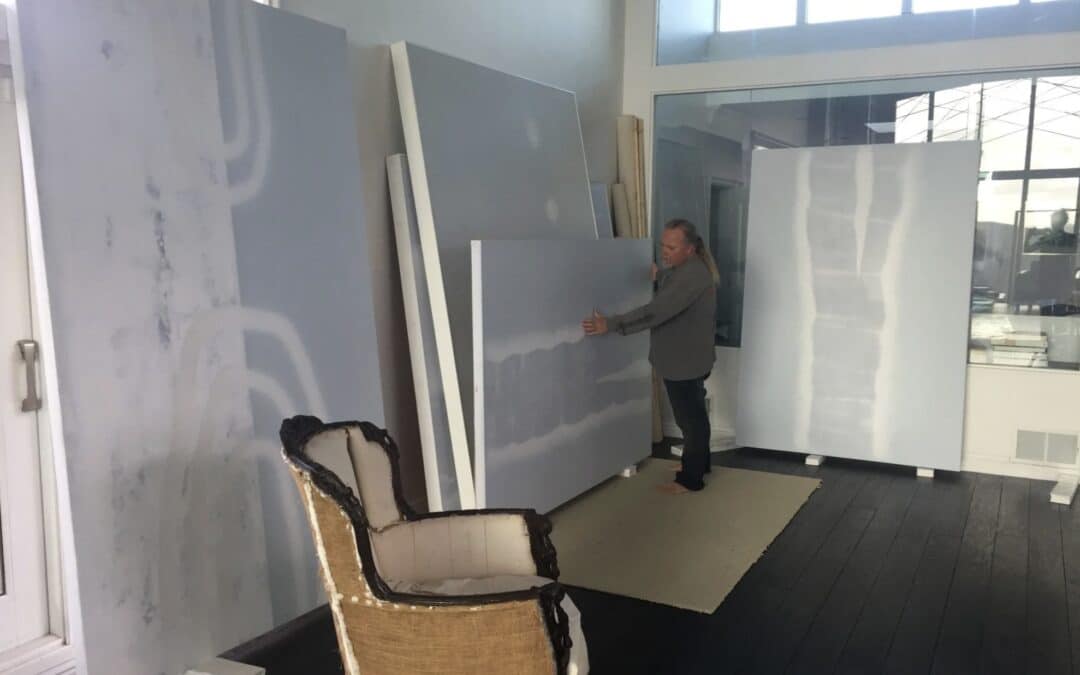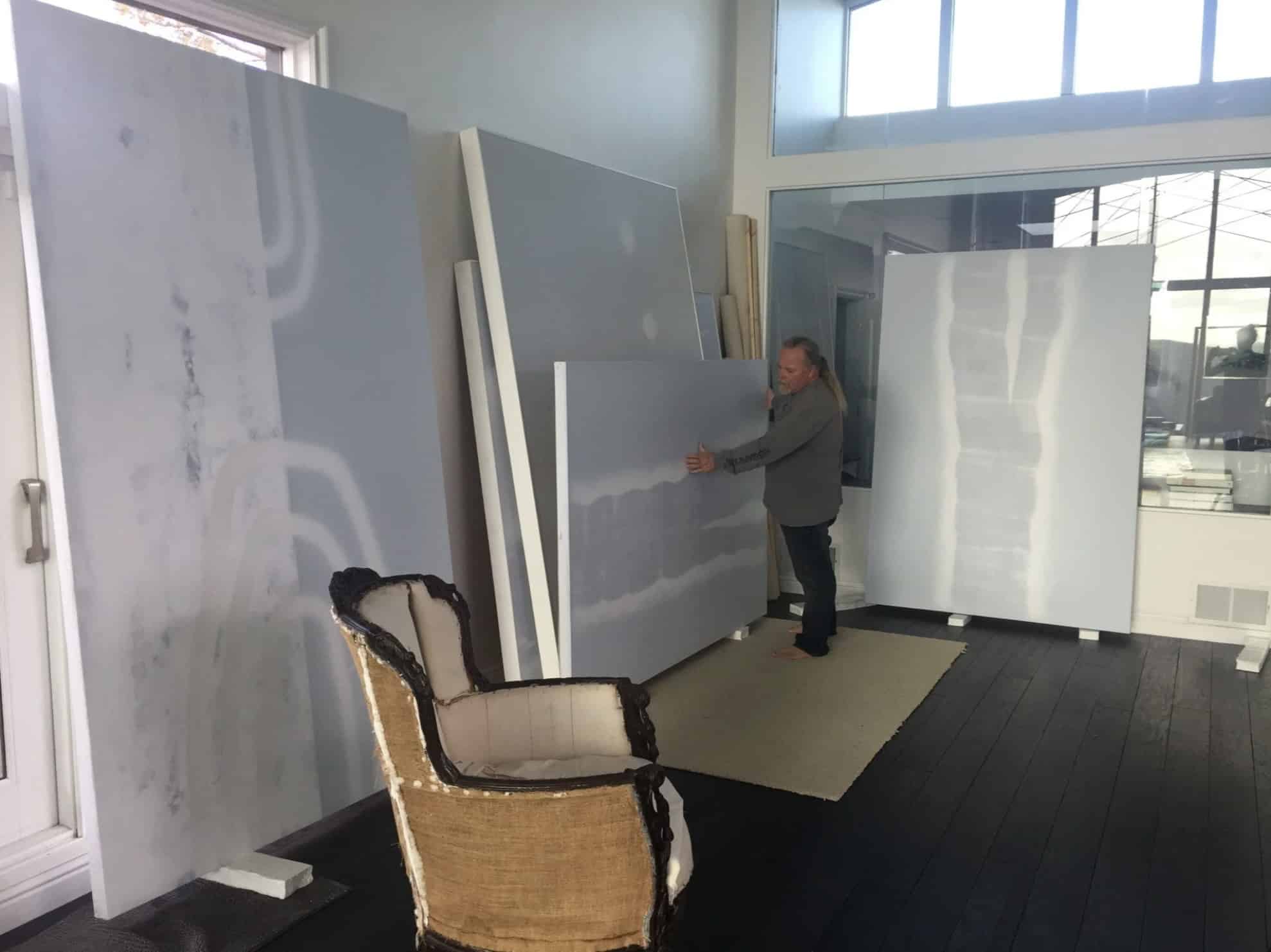
In the front room of the exhibition, daylight streaming through the large display windows is captured by the large panel paintings. The light passes through the surface, falls onto cut, perforated, and painted layers of canvas, and is ultimately reflected back into the space. In this way, it becomes a material in its own right—an integral component of the work. The artist plays with painterly concepts of transparency and opacity by employing a minimalist formal language. Alongside colour and form, he also considers the canvas as both support and material. Added to this is the space, structured by the scale of the panel paintings, akin to a Christian altarpiece: with their monochrome, translucent surfaces, the panel paintings both blend into their surroundings and dominate them, as they themselves appear like luminous silhouettes. Udo Nöger opens up the canvas, showing what is possible through small manipulations of the surface. At the same time, he conceals his artistic process beneath an almost opaque façade.
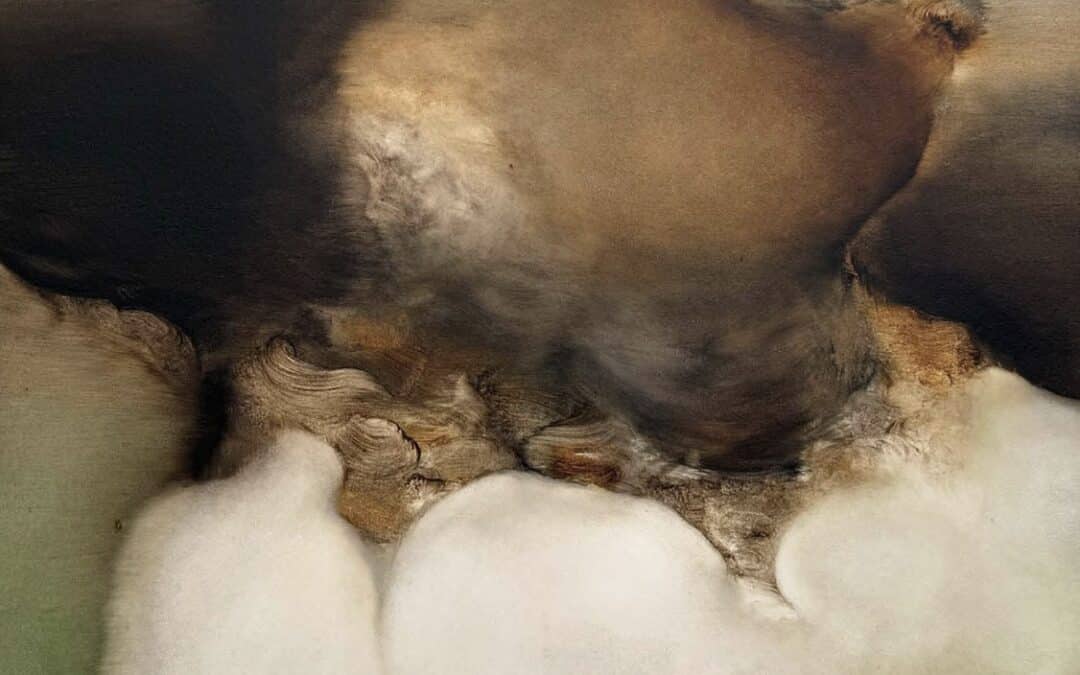
In the second room of the exhibition, where daylight enters only through the narrow passageway, shadows grow, becoming a more intimate and immediate experience. In the works made of charcoal on canvas, Udo Nöger relinquishes the surgical sharpness of his panel paintings. For the artist, the contrast between the canvas and the black charcoal—as a metaphor for the absence of light—is of immense importance. The artist follows the line; the line follows the stroke of the charcoal, which breaks and sheds dust as it is drawn. It is an intuitive process, often carried out with closed eyes or with his non-dominant hand, in order to stimulate his own subconscious. In this way, the drawings unfold into “inner landscapes” composed of fantasies, memories, thoughts, and emotional states. The line dances across the canvas and becomes shadow; the shadow becomes a dense weave and seems impenetrable—yet in these works the artist reveals himself, both personally and in his creative process.
Chasing the Light – Dancing in the Shadow thus brings together two practices of the German artist: on the one hand, the play with what is half-concealed and the meticulous artistic method in which light is captured and transformed; on the other, the liberation of the personal in spontaneous expression, in the dance with the line that condenses into shadow.