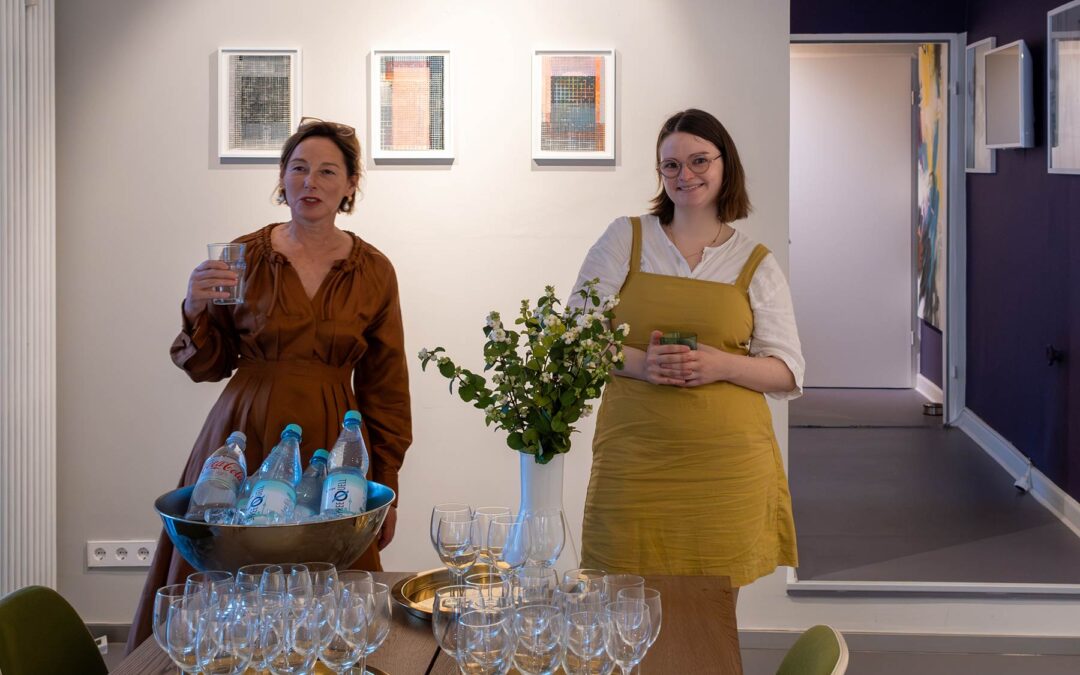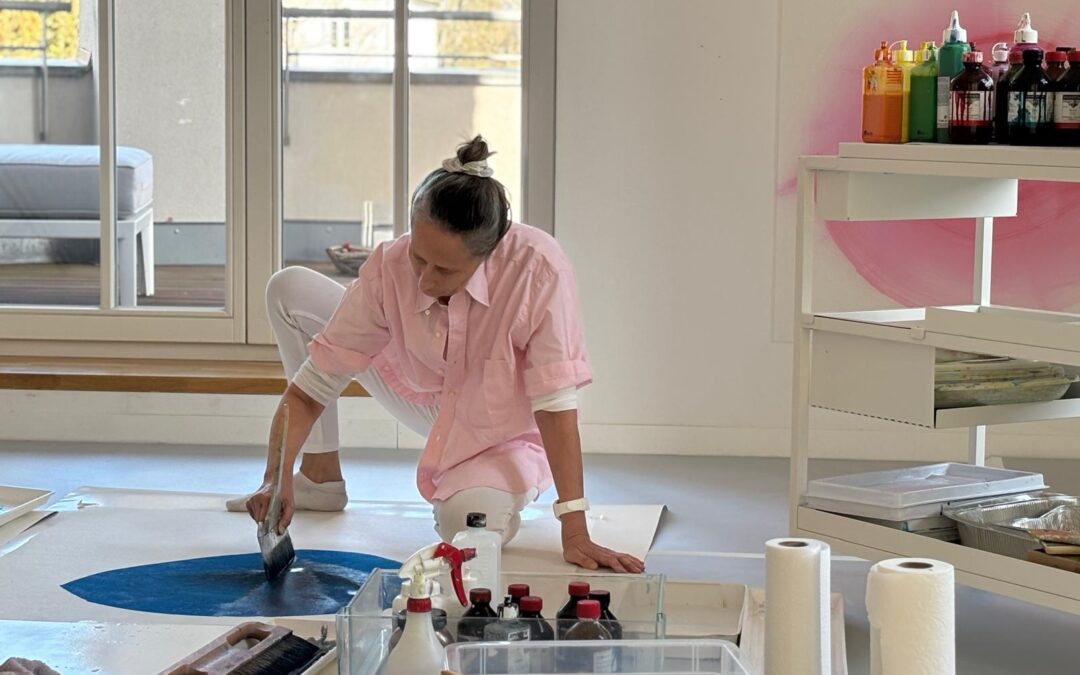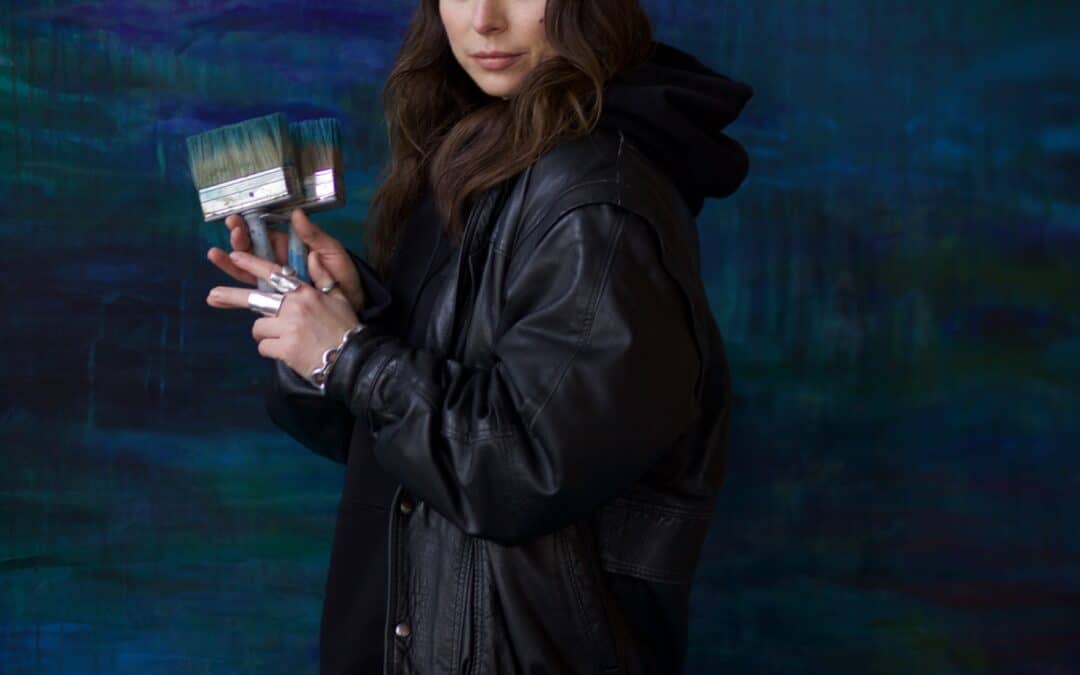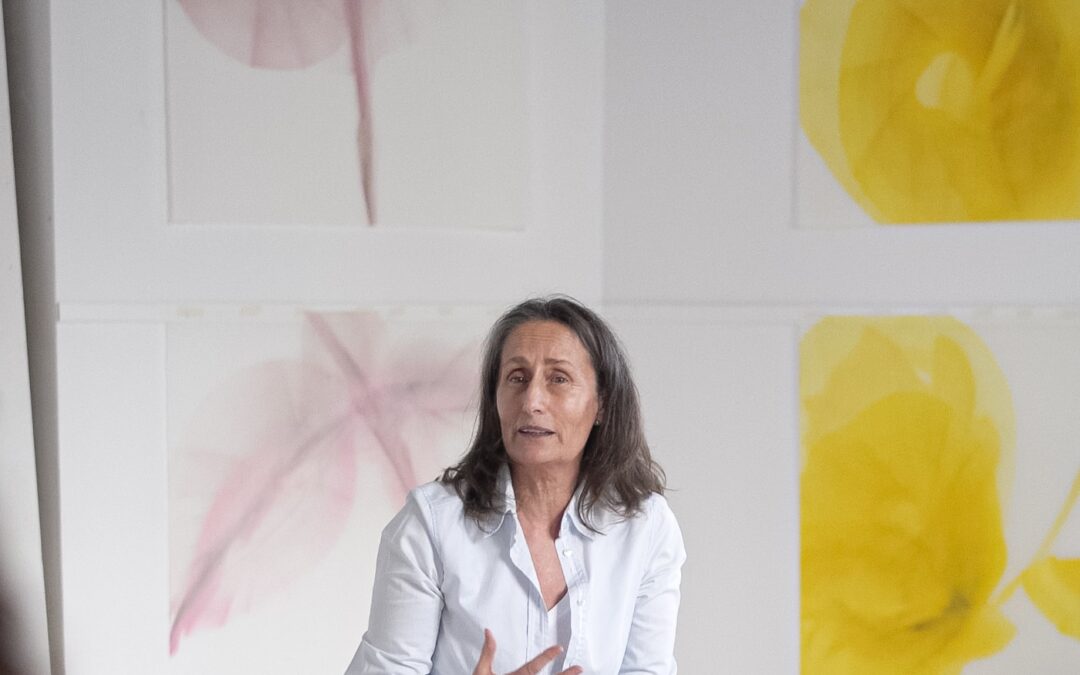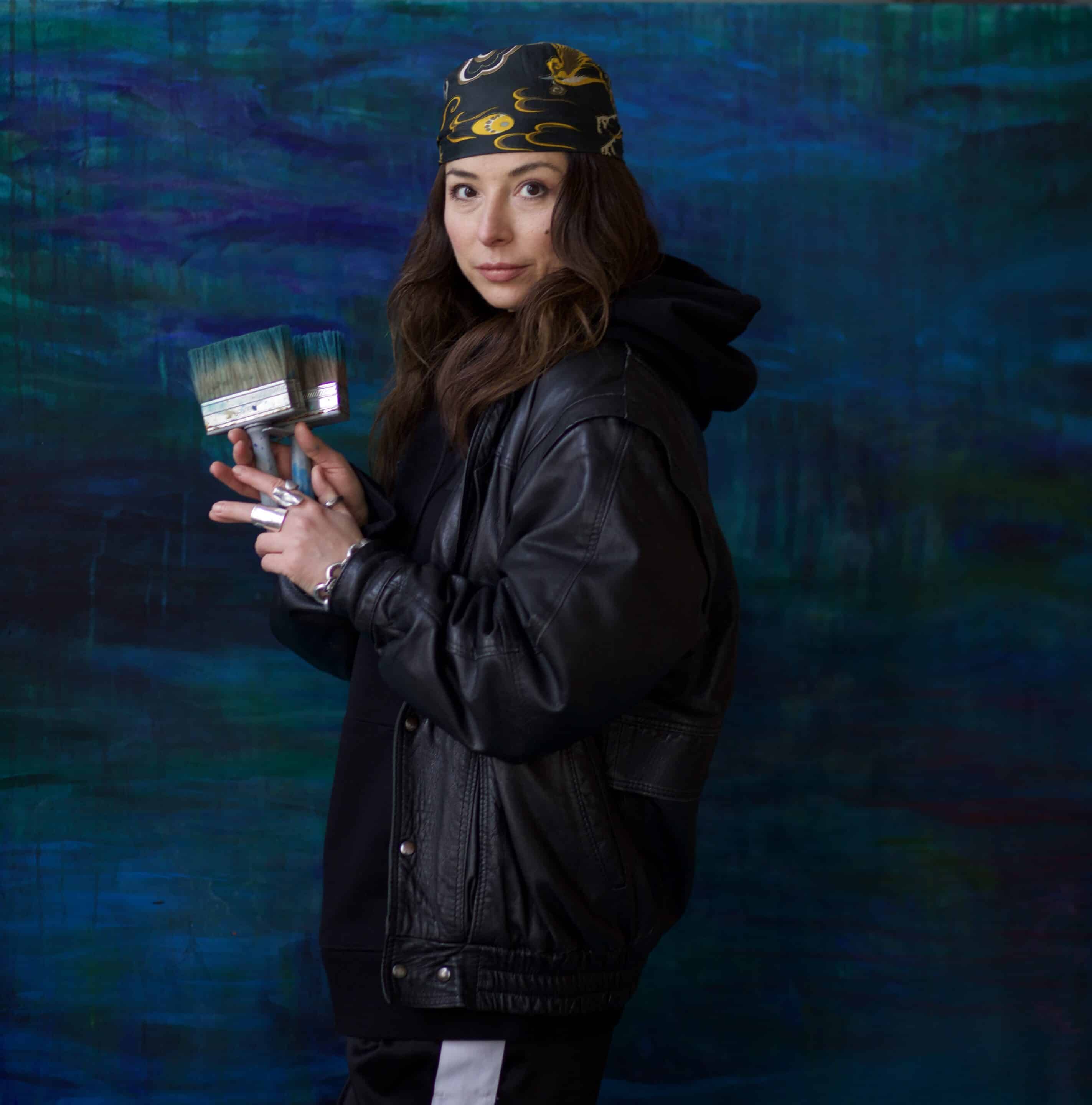
Galerie Anna Probst (GAP): How does your perspective as a woman influence your artistic practice, and are there specific themes related to gender, identity, or empowerment that emerge in your work?
Ganna Ki (GK): Being a woman artist means trusting my inner wisdom, being uncompromisingly intuitive, less rational and more emotional. For me, feminine energy is spontaneous, chaotic, playful, and deeply connected to nature and the elements. It is the Great Mother, but also Adam’s first wife, Lilith—a free, wild spirit whom the Church declared the mother of the devil because she refused to lie beneath.
When I work on a painting or sculpture, or write choreography for my performance—on any artwork—I allow myself to fall completely into this dream world of the dark feminine, into the shadow, the collective unconscious, and let the wisdom of the Great Goddess flow freely through me. I do not actively influence the creative process. I never know what she will show me, which goddess will appear, which myth, which archetype. It is like observing a daydream—self-hypnosis, altered states of consciousness. The work creates itself. I am simply deeply present, full of wonder and curiosity, waiting until the work says: Hello, I am ready.
I let the Goddess speak through me. She has so much to say—she has been silenced, suppressed, abused, controlled by the patriarchy for so long.
I am fascinated by the mythology of ancient civilizations, indigenous shamanisms, and esoteric mysticism, and by how these wisdoms are interconnected across different religions.
The divine feminine, the Great Goddess, and nature play a central role in my work. By recreating ancient archetypes such as Berehynia, the protective spirit of the forest from 14th–15th century pagan Ukraine, I establish a connection to the roots and traditions of my people, to draw strength and meaning from them and return to my true nature. Nature is my greatest teacher, my source of inspiration—fantastic, magical, and mysterious.
In my ritual earth performances, I use my body to form an earth figure—a silhouette of Berehynia, daughter of Bhumi, Mother Earth, rising from the womb of the earth. This was inspired by the American-Cuban artist Ana Mendieta. The interplay of fire and earth brings Berehynia to life, releases the goddess, and evokes the primal dance of birth, death, and rebirth.
GAP: How did you come to art, and what originally inspired you?
GK: I am a dreamer. I was born an artist. I started painting before I could walk. Since I was 12 years old, I stood on stage, performed in school theater, had a band at 15 where I sang alongside my twin brother, was captain of the school comedy club for two years, and began dancing in a show ballet group at 16. I taught art to other children.
I taught myself all of this—I never took art classes, never learned how to do it.
My family barely had enough money to survive in the 90s with four children. Sometimes we did not even have enough to eat, let alone a budget for paid art classes. But I had a wonderful cultural facilitator at school. We were an artistic group, constantly creating. My mother was a seamstress, my stepfather a civil engineer—both very skilled in manual work. I learned a lot from them.
GAP: Have you experienced particular challenges as a woman in the art world? If so, what helped you overcome them?
GK: As a woman, it is harder to be taken seriously. During the ten years I lived in Düsseldorf, I was not accepted or supported in the male-dominated art scene—especially since I was not affiliated with an art academy.
At that time, I studied Media and Cultural Studies at Heinrich Heine University in Düsseldorf. It was a major challenge to find exhibition spaces or secure a studio. Male artists there mostly supported only other male artists. I was often approached for assistant or marketing tasks.
Then I connected with the art collective at Halle3 Boui Boui Bilk, where there was a mix of artists, designers, and photographers. I also worked with the EXC collective Papier & Gelb Verlag on projects as an actress and dancer, assisted in Maxim Wakultchik’s studio, and completed my internship at the state gallery Alte Post with Klaus Richter.
After my studies, I moved to Berlin—and there my artistic career began to flourish. The incredible feminine energy in the city finally made me visible. I received much support from women-led galleries, including Probst, SLP, Lite Haus Gallery, Chrom Art, as well as from female curators, female, male, and queer artists, and art-ecology communities such as Lios Labs and Agronauts Collective.
Berlin became my true home—and I am very grateful for that.
GAP: Are there women artists—from the past or present—who have inspired your career?
GK: I am fascinated by the works and lives of Artemisia Gentileschi, Marina Abramović, Pina Bausch, Ana Mendieta, Frida Kahlo, Louise Bourgeois, Pussy Riot, Guerrilla Girls, Judy Chicago, Niki de Saint Phalle, Amy Sherald, Yayoi Kusama, Ithell Colquhoun, Yoko Ono, Georgia O’Keeffe, and Leonora Carrington.
Marina Abramović has probably had the greatest influence on my work. In 2017, during a deep transformation, I met Marina in Kyiv, where she gave a public lecture at the Pinchuk Art Centre. She said: If you are an artist, there is no second answer to the question of who you are. That changed my view of myself.
GAP: What advice would you give to young women artists navigating the art world?
GK: Trust yourselves and your unique vision. Be playful, work hard, and explore your divine feminine nature. Connect with queer artist communities and engage in art and ecology projects—this opens many new doors.
The most inspiring thing is collaborating with other women artists. It allows your work to grow faster and provides great support.
GAP: What developments in the art scene regarding equality would you wish for in the future?
GK: Women were historically excluded from the professional art sphere. Only with the feminist art movement of the 60s and 70s did this begin to change.
I want to see more female voices in the art world and more opportunities for women and queer artists to build professional careers in art.
GAP: How do you view the current art market? Are there trends that influence your work?
GK: I am currently traveling through Latin America—Peru, Ecuador, Colombia, and Mexico. Everywhere I see many women artists engaging with healing after trauma, community, nature, and spirituality.
The greatest theme in feminine art for me is the connection to the Great Cosmic Mother, to divine feminine energy, healing, and transformation.
GAP: Was it a conscious decision to work with a female gallerist, or were other factors decisive?
GK: My first encounter with galerie probst came through the talented curator and gallery assistant Véro Seibert. We had previously worked together at SLP Gallery with Véro.
After getting to know galerie probst, I was fascinated by their work and their deep understanding of contemporary art—both in the discourse on art history and politics, as well as regarding trends and the needs of the art world.
Anna is a great inspiration. She is a true female leader with a magical vision. I feel very fortunate to be able to work with galerie probst and their wonderful team.